
Strata Plans: What Apartment and Unit Buyers Should Check
Updated: Sep 18
Plain-English Answer
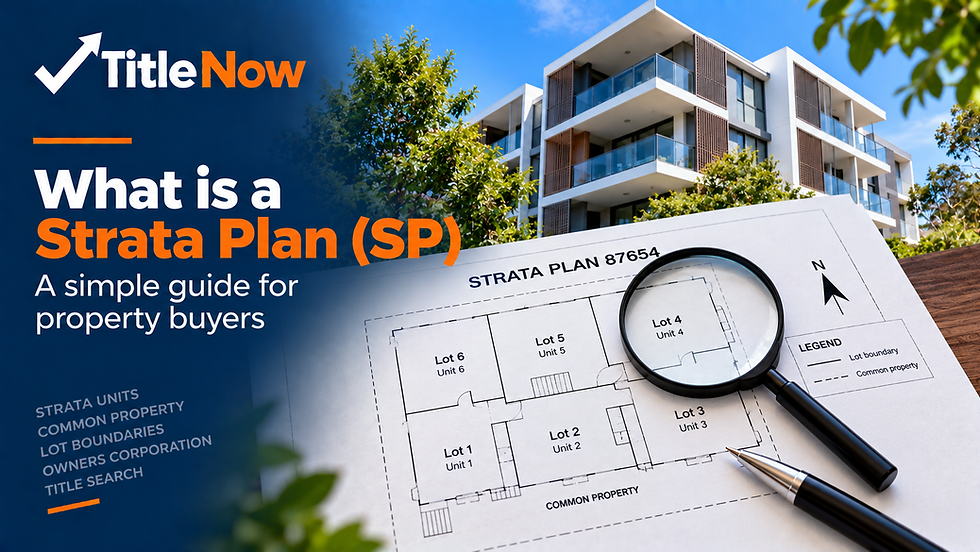
A strata plan is the registered document that divides a building or development into individual lots (units or apartments) and common property shared by all owners. It's what allows multiple people to hold separate, tradeable titles within the one building. Every state and territory has its own strata or community titles register, but the underlying concept is consistent across Australia: individual lots plus shared common property, all defined on a single registered plan.
Buyers considering an apartment or unit typically need to look at the strata plan alongside the strata or owners corporation records, since the two together show both the physical layout and the rules and finances of the scheme.
What the Document Can Show
A strata plan shows the boundaries of each individual lot (often defined by internal wall surfaces rather than land boundaries), the areas designated as common property, and any exclusive use areas such as courtyards, car spaces or storage.
Depending on the jurisdiction and the scheme, the registered plan may also show car spaces, storage areas, exclusive use areas and other scheme details, and may contain or be associated with an entitlement or liability schedule used for levies and voting. The exact terminology and legal effect of these schedules vary between states and territories, so it's worth checking the specific rules that apply where the property is located.
What It Cannot Establish
A strata plan does not show the financial position of the owners corporation or body corporate, any by-laws or rules affecting the scheme, upcoming special levies, or defects and maintenance issues in the building.
It also does not confirm zoning, council approvals, or the condition of common property assets such as roofs, lifts or car parks — that information comes from a separate strata or body corporate report, not the plan itself.
Practical Next Steps
Identify the strata or community plan number from the contract of sale or existing title, then, where available, order a copy through TitleNow for the relevant state or territory to review the lot layout and common property.
Alongside the plan, request the strata or owners corporation records (minutes, financial statements and by-laws) so you can assess the building's condition, finances and rules before committing to a purchase.
When to Seek Professional Advice
For help interpreting entitlement or liability schedules, by-laws, or how a strata plan affects your rights as an owner, speak with a conveyancer or solicitor experienced in strata transactions in that state or territory.
If a boundary or common property dispute arises, a licensed surveyor may be needed to clarify what the plan actually defines on the ground.
Related: What is a registered survey plan? · What is a covenant on a property title?

This article provides general information only and is not legal, conveyancing, surveying or financial advice. Property title and plan terminology can differ between Australian states and territories. Check the relevant land registry records for your property and obtain professional advice for your specific situation.


Comments