
Before You Dig Australia: Why Utility Plans Aren’t the Whole Picture
If you’re planning to excavate for a pool, shed footing, fence, retaining wall or extension, you’ve probably heard the advice: check before you dig.
The free national service is now called Before You Dig Australia (BYDA), although many Australians still know it by its former name, Dial Before You Dig or DBYD.
BYDA helps you obtain plans and safety information from participating utility asset owners. These plans can indicate underground electricity, gas, water and telecommunications infrastructure around your proposed work area.
It is an essential safety step—but utility plans aren’t the whole picture.
What Before You Dig Australia Covers
When you lodge a BYDA enquiry, you identify your proposed work area and provide information about the project. The relevant participating asset owners are notified and send their plans and safety information directly to you.
These plans can help identify the presence of underground infrastructure that could be affected by your work.
However, BYDA advises that the plans are generally indicative only. They may show that infrastructure is present without establishing its exact position or depth, and they may not show every domestic connection within your property.
Depending on the instructions supplied by the asset owner, you may need a skilled utility locator before excavation begins.
What BYDA Doesn’t Tell You
A BYDA enquiry is designed to help prevent damage to utility infrastructure. It is not a land-title, boundary or property-approval search.
It does not establish:
Your property’s legally registered boundaries
Whether existing fences follow the registered boundary
The complete location and dimensions of registered easements
Whether a right of way, covenant or other registered interest affects the land
Who currently owns the property
Whether your proposed structure requires planning or building approval
Whether you are permitted to build within a particular easement
That information must be obtained from other property records and, where necessary, qualified professionals.
Why a Registered Property Plan Matters
A registered property plan shows the legal parcel of land and its relationship to surrounding lots.
Depending on the state or territory and the type of property, it may be called a:
Deposited plan
Registered plan
Survey plan
Plan of subdivision
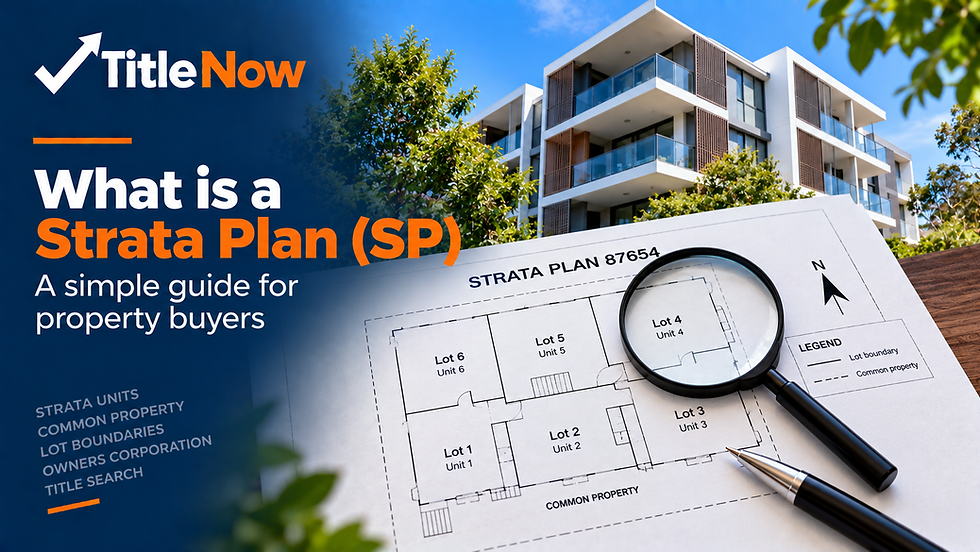
Strata plan
Folio plan
The plan may show the lot boundaries, dimensions, area, adjoining parcels and the position of easements recorded on that plan.
This makes it useful when assessing where a pool, shed, fence, retaining wall or extension could potentially be positioned.
However, a registered plan does not necessarily establish where a boundary or easement sits physically on the ground today. If you need a boundary marked, verified or re-established on-site, you should engage a licensed cadastral surveyor.
Where a Title Search Fits In
A title search provides different information from both a BYDA utility plan and a registered property plan.
A current title search can identify:
The registered owner
Mortgages
Caveats
Easements
Covenants
Other registered interests affecting the land
The title search identifies the registered interests, while the associated property plan may show the position of some of those interests in relation to the lot.
The documents are often most useful when reviewed together.
BYDA Plans vs Property Plans vs Title Searches
Each document answers a different question:
BYDA utility plans: What underground infrastructure may be present around the proposed work area?
Registered property plan: What is the registered lot layout, and where are boundaries, dimensions and depicted easements positioned on the plan?
Title search: Who owns the property, and what interests are registered against the title?
Licensed surveyor or skilled utility locator: Where are the relevant boundaries, easements or utility assets physically located at the work site?
No single document replaces the others.
A Practical Checklist Before Excavating
Before beginning excavation work:
Order the registered property plan to review the lot layout, dimensions and any easements depicted on the plan.
Order a title search if you need to confirm current ownership and registered interests affecting the land.
Lodge a free BYDA enquiry for the complete area where work is proposed.
Wait for responses from all relevant asset owners and follow the safety instructions accompanying their plans.
Cross-check the records against the proposed position of your pool, fence, footing, retaining wall or extension.
Check the required planning, building and asset-owner approvals before work begins.
Use a qualified surveyor or utility locator where the position of a boundary, easement or underground asset must be established on-site.
Do not assume that pipes and cables run in straight lines or at a consistent depth. Never commence excavation based only on a rough plan, an existing fence or information provided by a previous owner.
Get the Property Records You Need
TitleNow makes it easy to order available title searches and registered property plans for Australian properties, with upfront pricing and no account or quote request required.
Your BYDA enquiry helps you investigate utility infrastructure. Your property plan and title search help you understand the registered land parcel and the interests affecting it.
Check the complete property picture before you dig—not after the excavator arrives.

FAQ questions
Is Dial Before You Dig now called Before You Dig Australia?
Yes. The national service formerly known as Dial Before You Dig or DBYD is now called Before You Dig Australia, commonly abbreviated to BYDA.
Does Before You Dig Australia show property boundaries?
No. BYDA provides utility plans and safety information from participating asset owners. Registered property boundaries are shown on the relevant property plan, although a licensed cadastral surveyor may be needed to locate them physically on the ground.
Are Before You Dig plans exact?
No. BYDA advises that utility plans are indicative and generally identify the presence of infrastructure rather than its exact position or depth.
Do I need a property plan before excavating?
A registered property plan can help you understand the lot layout, dimensions and depicted easements. It should be reviewed alongside BYDA responses, applicable approvals and any professional site-location work required.
What documents should I check before digging?
Depending on the project, you may need a registered property plan, current title search, BYDA utility plans, planning or building approvals and advice from a surveyor or skilled utility locator.
This article provides general information only and is not legal, conveyancing, surveying, building or excavation-safety advice. Registered plan terminology and approval requirements differ between Australian states and territories. Always follow the instructions supplied by Before You Dig Australia and the relevant asset owners, and obtain professional advice for your specific property and project.


Comments